• Hola Invitado, Foromecanicos es el Foro de Automecanico y Autoelectronico - informacion sobre mecanica automotriz, computers, encendido y auto electronics, diagramas.

Problema Sensor de Oxigeno Silhouette

Buenos dias a todos aqui en el foro, ojala puedan orientarme sobre un problema que tengo en una camioneta Oldsmobile Silhouette 99 motor 3.4L y es referente al sensor de oxigeno que va antes del catalizador.

Cuando recien se compro la camioneta tenia encendido el testigo Check Engine con la falla P0135, me comentaron que la resistencia del calentador del sensor de oxigeno ya no servia (lo revisaron con multimetro), que se tenia que reemplazar pues el conector, cables y voltajes estaban bien. Antes de cambiar el sensor se procedio a limpiar inyectores, cuerpo de aceleracion, afinacion en general para corroborar que no fuera por este lado el problema, despues de esto se siguio encendiendo el testigo con la misma falla, y compre un sensor marca Tomco especifico para la camioneta, se coloco, se borraron fallas y enseguida de usarse se volvio a encender el testigo pero ahora con la falla P0134, el mecanico puso el anterior sensor y regreso a marcar el P0135 y el P0134 ya no marco, como que solo lo marcaba con el sensor Tomco. Lo que hice despues fue conseguir un sensor de una camioneta chocada exactamente igual, este sensor lo coloque en mi casa y despues me dirigi con el mecanico para que borrara las fallas, pero a unas cuadras de salir de mi casa, el testigo se apago solo y ya no fui al mecanico. El detalle despues de esto es que al usar la camioneta al cabo de una media hora a una hora se enciende el testigo con la falla P0134 y se mantiene asi hasta llegar a la casa y despues al siguiente dia que se utiliza a unas cuantas cuadras de mi casa se vuelve a apagar y se vuelve a encender despues del mismo lapso que ya comente y asi sucesivamente, ojala me puedan orientar sobre que puedo hacer aqui, saludos y gracias.
 
La PCM genera un voltaje de referensia de +- 450 mv en el circuito de senal del sensor de oxigeno. En frio ,la PCM detecta que la resistensia interna del senor es alta .Cuando el senor se calienta la resistensia es baja y comienza a generar un voltaje basado en el contenido de oxigeno en el escape .cuando la PCM determina que el tiempo nesesario para que el senor se caliente es superior a un minuto o que el voltaje no esta fuera de 390-490 mv determina que el senor esta inactivo o abierto y establese este codigo osea uqe tu problema no nesesariamente es que la resistenisa este cortada sino que puede estar fuera de lo espesificada por eso demora en ensender la luz y lo hace cuando el auto se calienta el escape cuando lo dejas enfriar la resistensia no se sale de sus parametros por eso se apaga la luz
 
Muchas gracias por responderme, entonces, tendría que conseguir un sensor completamente nuevo de la marca de la camioneta para que trabaje correctamente o que me recomiendas hacer?
 
revisalo por amperaje para saber su consumo y diagnosticar si el problema es su resistensia, un senosr en operasion normal consume entre 600 m/aperes y 1200 m/amperes es lo mides en el cable positivo del sensor
 
Muchas gracias, segun lo que me comentaste anteriormente, cual seria el procedimiento para revisarlo y como configuro el multimetro para hacer la medicion, saludos.
 
Gracias por su ayuda, seria una posibilidad el que le haga una afinacion completa de nuevo y que con eso pudiese resolver el problema o todo se centraria en revisar el sensor y en el peor de los casos reemplazarlo?
 
el sensor de oxigeno se verifica con un osciloscopio para detarminar la gráfica de salida de acuerdo a sus respectivas señales alta y baja, de tal forma que se debe observar una curva de tipo senoidal, con una frecuencia de aprox. 4 ciclos por segundo, en el caso de tu código P0135 se determina que está fallando la resistencia calefactora y en el P0134 que el sensor no opera o no genera la señal necesaria en el lapso de tiempo de precalentamiento, esto es, el primer sensor no sirve porque esta abierta la resistencia y el otro sensor no sirve porque se tarda mucho en generar señal puede estar sucio o caduco, lo más recomendable es reemplazar con uno original, no hace falta volver a afinar el motor, suerte y comenta.
 
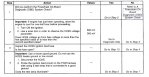
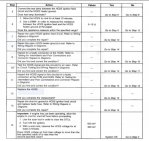
Hola, tuve un problema de DTC P0135 en un chevrolet monte carlo 2000 3.4L v6 , comparto guia de tests y ayuda diagnotico
CIRCUIT DESCRIPTION
Heated Oxygen Sensors (HO2S) are used in order to minimize the time that is required for closed loop fuel control operation and to allow accurate catalyst monitoring. The oxygen sensor heater greatly decreases the amount of time required for fuel control sensor HO2S 1 to become active. The oxygen sensor heater is required by the catalyst monitor sensor HO2S 2 in order to maintain a sufficiently high temperature. This allows accurate exhaust oxygen content readings further from the engine.

The Powertrain Control Module (PCM) will run the heater test only after a cold start, determined by the engine coolant temperature and the intake air temperature at the time of startup, and only once during an ignition cycle. When the engine is started the PCM will monitor the HO2S voltage. When the HO2S voltage indicates a sufficiently active sensor, the PCM determines how much time has elapsed since startup. If the PCM determines that too much time was required for HO2S 1 to become active, DTC P0135 will set. The time it should take the HO2S to reach operating temperature is based on the engine coolant temperature at startup and the average mass air flow since startup. Higher average airflow or higher startup engine coolant temperature means shorter time to HO2S activity.

CONDITIONS FOR RUNNING THE DTC
There are no active TP, MAP, MAF, ECT, IAT, fuel injector circuit, EVAP, or AIR DTCs present.
The Intake Air Temperature (IAT) is less than 35 C (95 F) at startup.
The Engine Coolant Temperature (ECT) is less than 35 C (95 F) at startup.
The IAT and the ECT are within 6 C (42 F) of each other at startup.
The system voltage is at least 9.0 volts and less than 18.0 volts.
The AIR pump is commanded OFF.

CONDITIONS FOR SETTING THE DTC
HO2S 1 voltage remains within 150 mV of the bias voltage, or approximately 450 mV, for more time than it should. The amount of time varies depending on the engine coolant temperature at startup and the average air flow since startup, but will not exceed 2.5 minutes.

ACTION TAKEN WHEN THE DTC SETS
The PCM will illuminate the Malfunction Indicator Lamp (MIL) during the second consecutive trip in which the diagnostic has been run and failed.
If equipped with traction control, the PCM will command the Electronic Brake And Traction Control Module (EBTCM) via the serial data circuit to turn OFF traction control, and the EBTCM will illuminate the TRACTION OFF lamp.
The PCM will store conditions which were present when the DTC set as Freeze Frame and Failure Records data.

CONDITIONS FOR CLEARING THE MIL/DTC
The PCM will turn OFF the MIL during the third consecutive trip in which the diagnostic has been run and passed.
The History DTC will clear after 40 consecutive warm-up cycles have occurred without a malfunction.
The DTC can be cleared by using a scan tool.

DIAGNOSTIC AIDS
Inspect for:

IMPORTANT: Remove any debris from the connector surfaces before servicing a component. Inspect the connector gaskets when diagnosing or replacing a component. Ensure that the gaskets are installed correctly. The gaskets prevent contaminate intrusion.

Poor terminal connection - Inspect the harness connectors for backed out terminals, improper mating, broken locks, improperly formed or damaged terminals, and faulty terminal to wire connection. Use a corresponding mating terminal to test for proper tension.
Damaged harness - Inspect the wiring harness for damage. If the harness inspection does not reveal a problem, observe the display on the scan tool while moving connectors and wiring harnesses related to the sensor. A change in the scan tool display may indicate the location of the fault.
PCM and engine grounds for clean and secure connections

If the DTC is determined to be intermittent, reviewing the Failure Records can be useful in determining when the DTC was last set.

TEST DESCRIPTION
The numbers below refer to the step numbers on the diagnostic table.
2. The HO2S should be allowed to cool before performing this test. If the HO2S heater is functioning, the signal voltage will gradually increase or decrease as the sensor element warms. If the heater is not functioning, the HO2S signal will remain near the 450-mv bias voltage.
4. This step ensures that the ignition feed circuit to the HO2S is not open or shorted. The test lamp should be connected to a good ground, in case the HO2S low or HO2S heater ground circuit is faulty.
5. This step tests the HO2S heater ground circuit.
6. This step inspects for an open or shorted HO2S heater element. The heater element resistance will vary according to HO2S temperature. A hot HO2S heater element will measure much more resistance than a HO2S heater element that is at ambient temperature. It is important to allow the HO2S to cool before measuring the HO2S heater element resistance.
 

Adjuntos

  • chevy-montecarlo-P0135-1.jpg
    chevy-montecarlo-P0135-1.jpg
    177,8 KB · Visitas: 351
  • chevy-montecarlo-P0135-2.jpg
    chevy-montecarlo-P0135-2.jpg
    134,4 KB · Visitas: 298

Siguenos en:
El contenido de especificaciones técnicas,comentarios, opiniones y otros datos en este foro sólo son con fines informativos y son de exclusiva responsabilidad de cada usuario. Foromecanicos.com no puede y no verifica ni garantiza la exactitud o exhaustividad de la información. Usted utiliza este sitio web bajo su propio riesgo y solo con fines informativos. Las marcas y los logotipos de los fabricantes de automóviles en esta página web son propiedad de los titulares de las mismas. Usamos cookies.Si continúas utilizando este sitio, estás consintiendo utilizar cookies.
Arriba